TL;DR
If your air conditioner is struggling to keep your home cool during Utah’s hottest summer days, don’t assume replacement is your only option. Many systems can be repaired, while others have reached the point where installing a new, energy-efficient unit will save more money over time. This guide explains how to tell the difference, what warning signs to watch for, and how to make the best decision for your home and budget.
If you’ve lived in Utah for any length of time, you know July is when your air conditioner truly earns its keep. The cooler spring mornings are long gone, the afternoon temperatures regularly climb into the 90s and beyond, and your AC may be running for hours at a time just to keep your home comfortable.
For many homeowners, this is also the time of year when hidden problems finally begin to surface. Maybe your system has started blowing warmer air than usual. Maybe it never quite reaches the temperature you’ve set on the thermostat, or perhaps it seems like it’s running all day without ever catching up. These are some of the most common reasons homeowners begin searching for AC repair in Utah, and they often lead to one important question:
Should I repair my air conditioner, or is it finally time to replace it?
The answer isn’t always obvious. While some HVAC companies immediately recommend replacement, the reality is that many air conditioning systems still have years of dependable service left with the right repair. On the other hand, continuing to invest money into an aging system that struggles every summer can end up costing far more than installing a modern, high-efficiency unit.
Understanding the difference can help you make a smarter financial decision while keeping your home comfortable through the hottest part of the year.
Start by Looking at Your System’s Age
One of the biggest factors in deciding between repair and replacement is the age of your air conditioner.
Most central air conditioning systems have an expected lifespan of around 15 to 20 years when they receive regular maintenance. That doesn’t necessarily mean a 15-year-old unit needs to be replaced tomorrow, but it does mean repairs should be evaluated differently than they would be on a newer system.
If your air conditioner is only six or seven years old and has generally been reliable, replacing it because of a single repair usually doesn’t make financial sense. On the other hand, if your unit is approaching two decades old and has required multiple repairs over the past few summers, investing additional money into it may simply delay the inevitable.
This is where having an experienced HVAC technician inspect the system becomes valuable. Rather than guessing, you can understand the overall condition of the equipment and make a decision based on facts instead of frustration.
If your system is relatively new and still in good condition, scheduling professional AC repair services is often the smartest first step. Christensen Air Solutions provides comprehensive AC repair services in Utah designed to diagnose problems accurately and restore cooling as quickly as possible. You can learn more about our AC Repair Services directly from our website.
How Your Air Conditioner Performs During July Tells You a Lot
Mid-July is often the ultimate test for any cooling system.
When temperatures consistently stay in the upper 90s or climb into triple digits, your air conditioner is operating under maximum demand. A system that performed adequately during May or June may suddenly begin falling behind once the hottest weather arrives.
If your home takes significantly longer to cool than it used to, don’t immediately assume your air conditioner has failed. Dirty condenser coils, clogged air filters, low refrigerant, failing capacitors, or airflow restrictions can all reduce cooling performance while still being completely repairable.
However, if your system has struggled every summer for the past several years despite regular repairs, that’s a different conversation entirely.
One repair might be reasonable. Three major repairs over two summers usually indicate the system is nearing the end of its useful life.
According to the U.S. Department of Energy, properly maintained and correctly sized high-efficiency air conditioning systems can significantly reduce cooling costs while improving overall comfort.
https://www.energy.gov/energysaver/central-air-conditioning
Rising Utility Bills Are Often Trying to Tell You Something
Many homeowners don’t realize their monthly power bill is one of the earliest indicators that their air conditioner is becoming less efficient.
If your usage habits haven’t changed but your electric bill keeps climbing every summer, your air conditioner could be working much harder than it should.
As equipment ages, compressors lose efficiency, coils accumulate wear, motors require more energy, and refrigerant systems become less effective. The result is longer run times, higher operating costs, and reduced cooling performance.
Sometimes a repair restores much of that lost efficiency.
Other times, replacing an older system with a modern high-efficiency unit produces immediate savings that continue for years.
Modern ENERGY STAR® certified systems often consume substantially less electricity than systems installed 15 to 20 years ago, making replacement a worthwhile long-term investment for many Utah homeowners.
https://www.energystar.gov/products/heating_cooling
Frequent Repairs Start to Add Up
Every homeowner expects to make occasional repairs. Just like your car, your air conditioner has moving parts that wear over time. A failed capacitor, a faulty contactor, or a clogged condensate drain doesn’t necessarily mean it’s time to replace the entire system.
The problem begins when repairs become routine.
Think back over the last two or three cooling seasons. Have you called for AC service once? Or have you found yourself scheduling repairs every summer, sometimes multiple times during the same season?
When repair bills begin adding up year after year, it’s worth looking beyond the immediate cost. A $400 repair today may seem easier than investing in a new system, but if another $700 repair follows next month and another one the following summer, you’ve quickly spent thousands of dollars on equipment that’s still becoming less efficient.
One guideline many HVAC professionals use is the “50% Rule.” If the cost of repairing your air conditioner approaches 50 percent of the cost of replacing it, replacement often becomes the better long-term investment.
That doesn’t mean every expensive repair should automatically lead to a new system, but it does provide a useful starting point for evaluating your options.
If you’re unsure which direction makes the most financial sense, scheduling a professional evaluation through our AC Installation Services allows you to compare repair costs with replacement options based on your specific system rather than making a decision in the middle of a breakdown.
Comfort Shouldn’t Be a Constant Battle
Many homeowners don’t realize how much they’ve adapted to a struggling air conditioner.
Maybe you’ve started avoiding certain bedrooms during the afternoon because they never cool down. Maybe the upstairs is consistently five or six degrees warmer than the main floor. Perhaps everyone in the family argues over the thermostat because no setting seems comfortable.
Those aren’t normal conditions.
Your air conditioner should maintain relatively consistent temperatures throughout your home. While no HVAC system produces identical temperatures in every room, large temperature swings often indicate something needs attention.
Sometimes the solution is surprisingly simple. Dirty evaporator coils, restricted airflow, undersized return ducts, or leaking ductwork can all contribute to uneven cooling while being far less expensive to address than replacing the equipment.
Other times, especially in older homes or additions, the issue isn’t the air conditioner itself at all.
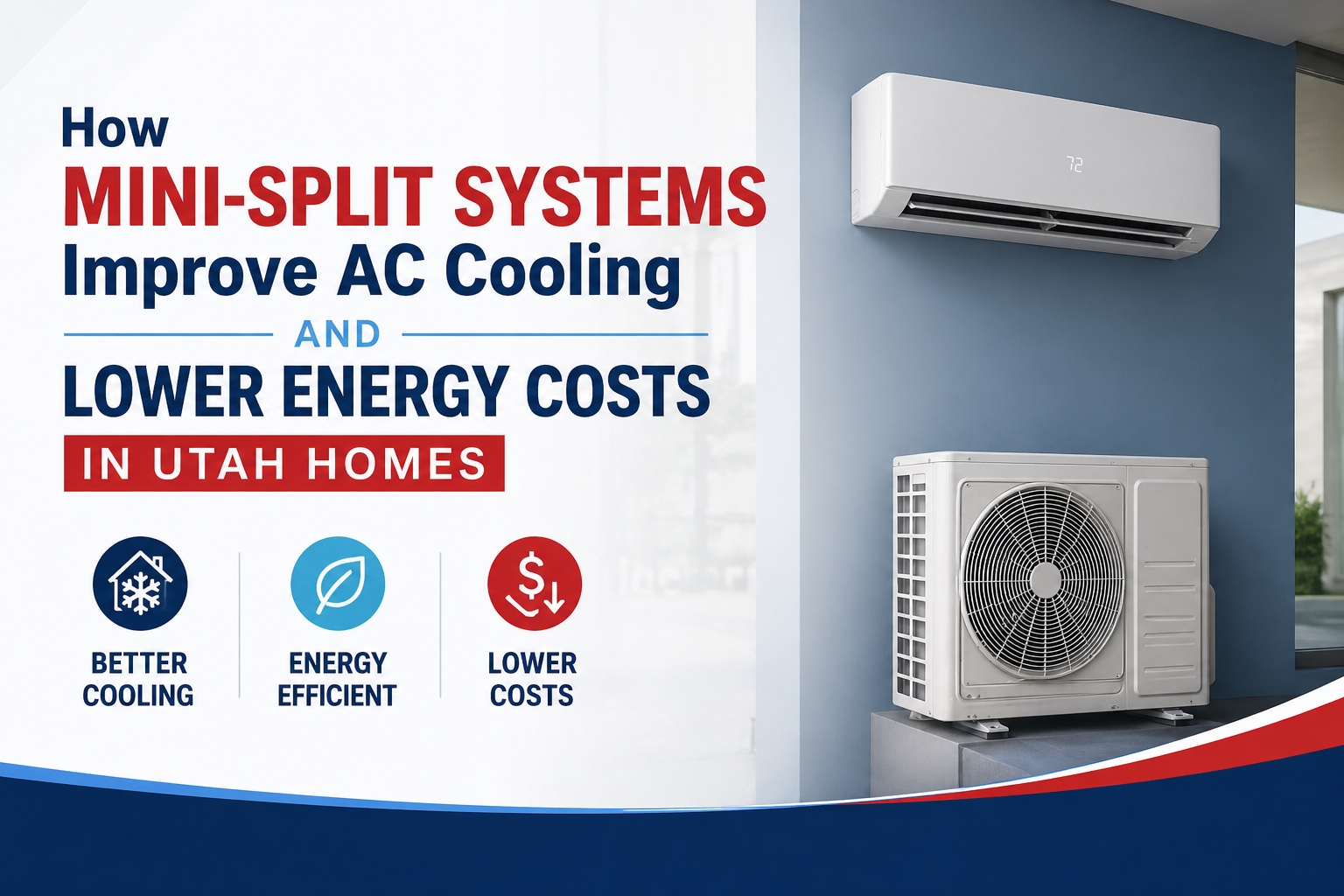
In many Utah homes, mini-split systems have become an excellent solution for rooms that central air has always struggled to cool. Home offices, bonus rooms, garages converted into living space, finished basements, and second-story bedrooms are all excellent candidates for ductless cooling.
Rather than replacing an otherwise functional central system, adding a professionally installed mini-split may solve the comfort problem while using significantly less energy.
Don’t Ignore the Warning Signs
Air conditioners usually don’t stop working without warning.
More often than not, they give homeowners weeks or even months of subtle clues before a complete breakdown occurs.
You may notice the house takes longer to cool after work. The outdoor unit might sound louder than normal. Your AC may start running almost continuously during the hottest part of the day.
Sometimes you’ll hear buzzing, rattling, or clicking noises that weren’t there before. Other homeowners notice water around the indoor unit or ice forming on the refrigerant line.
Each of these symptoms points to a different issue, but they all have one thing in common.
They’re easier and less expensive to fix early.
Waiting until the system completely quits often turns what could have been a straightforward repair into a much larger project, especially during July when HVAC companies across Utah experience their highest demand for emergency service.
Why Timing Matters More Than Most Homeowners Realize
There’s a reason HVAC companies get extremely busy during the hottest weeks of summer.
Air conditioners that barely survived June are suddenly being pushed to their limits. Compressors run longer, electrical components experience more stress, and systems that were already operating inefficiently finally reach the breaking point.
If you’re already questioning whether your current air conditioner is reliable enough for another season, waiting until it fails completely usually limits your options.
Scheduling an inspection while your system is still operational gives you time to understand what’s happening without the pressure of losing cooling during a heat wave.
You’ll also have more flexibility when it comes to scheduling repairs or selecting replacement equipment, rather than taking whatever is immediately available during an emergency.
What a New Air Conditioner Offers Beyond Cooler Air
Many homeowners focus only on whether a new system will make the house colder.
The truth is, today’s air conditioners offer improvements that go well beyond cooling performance.
Modern systems operate more quietly, maintain more consistent temperatures, remove humidity more effectively, and consume significantly less electricity than equipment installed fifteen or twenty years ago.
Variable-speed technology allows systems to adjust output gradually instead of cycling fully on and off every few minutes. That creates more even temperatures throughout the home while reducing wear on major components.
If you’re replacing an older unit, you’ll likely notice improved comfort almost immediately.
Many homeowners are surprised to discover that rooms which have always struggled to stay cool suddenly become comfortable again simply because the new equipment is properly sized and significantly more efficient.
Choosing the Right HVAC Contractor Matters
Whether your air conditioner needs a repair or a complete replacement, who performs the work matters just as much as the equipment itself.
A quality contractor doesn’t begin the conversation by recommending the most expensive option. They begin by understanding what’s actually happening with your system.
That means inspecting the equipment, measuring airflow, checking refrigerant pressures, evaluating electrical components, and discussing how the system has been performing in your home.
An honest recommendation should be based on facts, not sales pressure.
Sometimes that’s a simple repair.
Sometimes it’s a replacement.
The right answer depends entirely on the condition of your equipment and your long-term goals.
At Christensen Air Solutions, we believe homeowners should understand why we’re recommending a solution before making any decision. Our goal isn’t to sell equipment you don’t need. It’s to provide reliable recommendations that keep your home comfortable while helping you make the best investment for your budget.
Frequently Asked Questions
Is it worth repairing a 15-year-old air conditioner?
It depends on the overall condition of the system and the cost of the repair. If the unit has been reliable and the repair is relatively minor, fixing it may still make sense. If it has required multiple repairs and struggles to cool your home efficiently, replacement is often the better long-term investment.
How long should an AC system last in Utah?
Most well-maintained systems last between 15 and 20 years. Utah’s hot summers, dust, and extended cooling season can shorten that lifespan if regular maintenance is neglected.
Will a new AC really lower my electric bill?
In many cases, yes. Modern high-efficiency systems use considerably less electricity than older equipment and often cool homes more quickly while maintaining more consistent temperatures.
Should I wait until my AC completely fails before replacing it?
Generally, no. Planning a replacement before complete failure allows you to compare options, avoid emergency scheduling, and install new equipment on your timeline rather than during a heat wave.
Key Takeaways
If your air conditioner isn’t keeping your home comfortable this summer, don’t assume replacement is your only option. Many cooling issues can be repaired quickly when caught early.
However, if your system is older, requiring frequent repairs, or causing consistently high utility bills, replacing it with a modern high-efficiency unit may provide better comfort and lower operating costs for years to come.
The best decision starts with understanding the condition of your current equipment.
Ready for an Honest Recommendation?
If your air conditioner has been struggling through Utah’s summer heat, now is the time to find out why.
Whether you need a simple repair, a second opinion, or a completely new cooling system, Christensen Air Solutions is here to help. Our experienced technicians provide honest recommendations, professional workmanship, and solutions designed specifically for Utah homes.
Whether it’s AC repair, AC installation, or exploring whether a mini-split system is the right fit for your home, we’ll help you make the decision with confidence.
Schedule your AC evaluation today and stay comfortable through the rest of the summer.